
Pourquoi avoir un humidificateur à la maison?
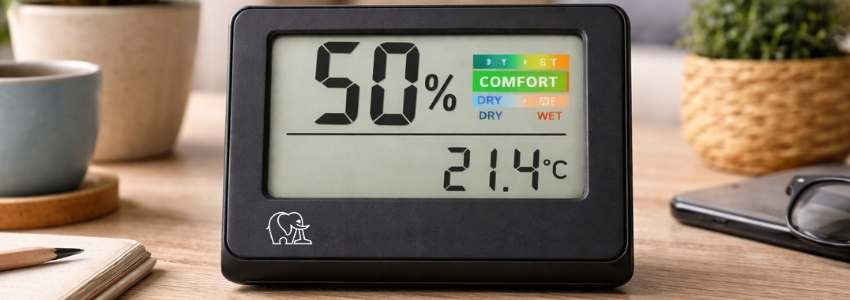
L’humidité de l’air influence directement votre confort, votre santé et même la durabilité de votre maison. Un humidificateur vous permet de maintenir un taux d’humidité optimal et d’éviter les problèmes liés à l’air trop sec ou trop humide.
Qu’est-ce que l’humidité relative ?
L’humidité relative (HR) indique la quantité de vapeur d’eau présente dans l’air et se mesure en pourcentage :
-
Un air sec = faible pourcentage
-
Un air humide = pourcentage élevé
Maintenir un taux équilibré (idéalement 30 % à 45 %) est important pour :
-
Protéger votre santé (peau, yeux, voies respiratoires)
-
Prévenir la condensation et les moisissures
-
Préserver vos meubles et instruments en bois
Les trois types d’humidificateurs
-
Humidificateurs à vapeur chaude
-
Chauffent l’eau pour produire de la vapeur.
-
Efficace, mais consomme plus d’électricité et peut être chaud au toucher.
-
-
Humidificateurs à ultrasons
-
Produisent une fine brume grâce aux vibrations ultrasoniques.
-
Silencieux et économes, mais peuvent laisser des traces blanches de minéraux si l’eau n’est pas filtrée.
-
-
Humidificateurs par évaporation (modèle suggéré pour un meilleur confort)
-
Fonctionnent naturellement : un ventilateur fait passer l’air à travers un filtre humide.
-
Avantages :
-
Sécuritaires et efficaces
-
Demandent le moins d’entretien
-
Consomment le moins d’énergie
-
Diffusent la vapeur sur une plus grande surface
-
Évitent le risque de trop d’humidité ou de vapeur brûlante
-
Ne laissent pas de dépôts de minéraux
-
-
Idéal pour créer un environnement confortable et sain tout au long de l’hiver.
-
Taux d’humidité recommandé selon la température extérieure
| Température extérieure (°C) | Humidité relative intérieure maximale à 20°C |
|---|---|
| -30 ou moins | 15% |
| -30 à -24 | 20% |
| -24 à -18 | 25% |
| -18 à -12 | 30% |
| -12 à -6 | 35% |
| -6 à 0 | 40% |
Astuce : Une bonne circulation d’air aide aussi à éviter la condensation sur les fenêtres.
Source : Société Canadienne d’Hypothèques et de Logement (SCHL)